
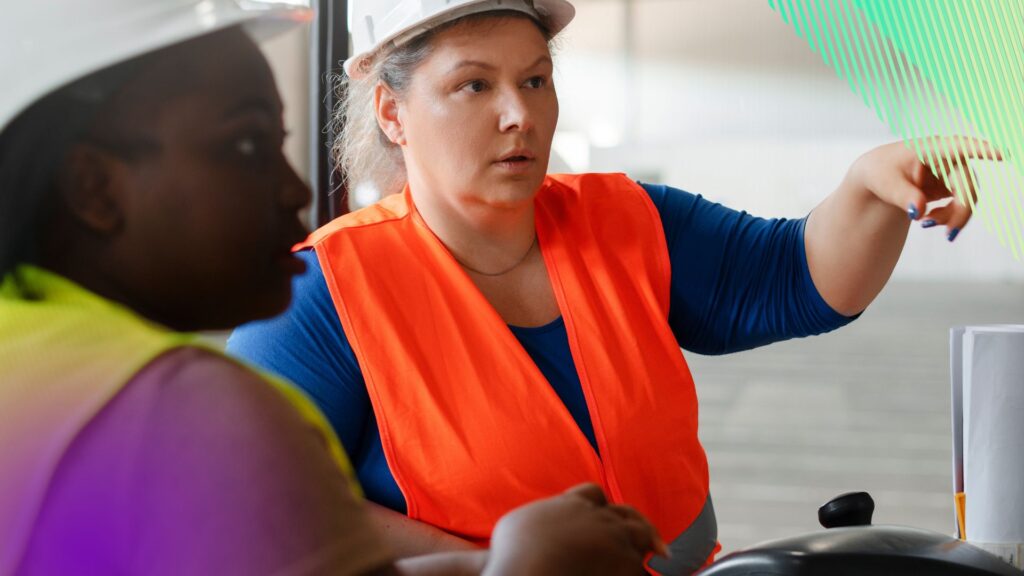
Temporary and contract workers make up a significant portion of the construction industry. From tradespeople hired for speciality projects to seasonal labour addressing temporary needs, these employees are an essential part of our workforce. But their choice of career often leaves them more vulnerable to injury and accidents. Health and safety regulations are in place to protect all workers on the site; however, providing temporary and contract staff with appropriate safety training is still one of the biggest challenges.
Temporary employees, in contrast, may not be as familiar with the site itself, its hazards or its safety procedures. Labour hire workers may be skilled in their particular trade, but may not be familiar with the company’s OHS construction practices. This knowledge gap creates vulnerabilities. Indeed, ongoing studies reveal that temporary and contract workers are more likely to be injured than their permanent counterparts.
The good news is that these risks can be successfully managed with targeted OHS construction safety training. Suppose employers make the effort to ensure consistent onboarding, communication and adherence with OHS standards. In that case, they will be successful in making their workplaces safer for everyone, regardless of ‘employment’ status.
Why Temporary and Contract Workers Face Higher Safety Risks
Construction cannot be completed without the help of temporary and contract workers, but these transient work arrangements often lead to safety lapses. They could receive differing levels of induction or have the same OHS construction training resources readily available to them as a full-time worker. Instead, they are expected to “hit the ground running,” sometimes without a thorough understanding of the site’s risks or protocols.
The other crucial ingredient: familiarity, or the lack of it. Full-time employees don’t fear unfamiliarity as much; they become accustomed to the layout of a site and the daily activities, as well as the associated dangers. Part-time workers may find themselves entering a strange new facility for just a couple of days or weeks. This unfamiliarity can heighten the likelihood of accidents, especially in dynamic construction sites with rapidly changing hazards.
Language barriers are another challenge. Temporary and contract workers often come from diverse cultural backgrounds with limited English proficiency, making it challenging to read and understand OHS construction signs and policies. One size doesn’t fit all, so without specific comms, safety communication can be compromised.
Additionally, contractors may prioritise speed over safety if they feel deadlines are bearing down on them. This can result in shortcuts that circumvent safety checks or PPE standards, for example. Temporary labourers, who may rely on the prospect of future jobs, could be wary of complaining about unsafe conditions.
All of this leads to an increase in injuries. The first step in developing safety programs that bridge the gap is to acknowledge these vulnerabilities. Practical OHS construction training should apply to every worker, regardless of their duration of stay on-site.
Legal Requirements for Training Under OHS Construction Standards
While establishing OHS construction laws worldwide, it is essential that all workers, whether temporary (“casual”), contracted, or permanent, are properly qualified and trained. Employers shouldn’t assume that workers already understand the rules, just because they’ve worked on other sites. Each site presents its own risks, and it’s the employer’s legal responsibility to ensure that everyone understands them.
In Australia, the Model Work Health and Safety Regulations stipulate that if a person enters a construction workplace, they must be given a general site induction, not just to employees, but also to contractors and labour-hire staff, to indicate that some form of risk management has been undertaken. In the United States, these are also enforced (under requirements for “competent” persons) through construction safety standards for workers, designated as Level 1 specific individual training in OSHA standards that develop safety-trained workers capable of recognising hazards and have received extensive instruction on hazards and injury avoidance; such training would include an introduction to PPE. The UK’s Health and Safety Executive (HSE) reflect this need in the Construction (Design and Management) Regulations.
A lack of proper OHS construction training can result in fines, project delays, and damage to a company’s reputation. More tragically, it places lives in danger. Complying with the law isn’t only about dodging penalties — it is a part of meeting a duty of care to labour. Employers also have to prove the training is documented and not just talk. All temporary and contract staff must be qualified in site induction before starting work. Additional training or supervision may be necessary in high-risk jobs.
By integrating training into the hiring and onboarding stages, companies can ensure that their legal obligations are met while establishing a foundation of safety. It’s black and white in OHS construction standards: each worker has the right to know what they need to do to keep themselves and others safe on the job.
Best Practices for Training Temporary and Contract Workers
Providing engaging OHS construction safety training to temporary and contractual workers requires a strategic plan. Training may need to be focused and brief, however, because such a workforce might only be present for short periods. The challenge is to provide them with the minimum information they need to protect themselves without leaving them unable to act on what they know.
Begin with a thorough site induction. This content should at least include site-specific hazards, emergency procedures, PPE requirements, reporting mechanisms, and the hierarchy for expressing safety concerns. Keep it practical by walking people around the site and showing them real-life examples of hazards, rather than just presenting them.
Customise the training to your audience. If workers are not well-versed in English, consider translated materials, visual aids or multilingual trainers. Put your actions where your mouth is, so to speak, or demonstrate with real, hands-on experience. Providing clear and accessible communication is essential for temporary workers to fully understand OHS construction regulations.
Ongoing reinforcement is equally essential. Toolbox talks, daily briefings and refresher courses help to maintain a focus on safety. As employees of limited tenure, temps are unlikely to be exposed to the safety culture for the long term, so frequent reminders bridge that exposure gap.
Also, temporary staff can be paired with experienced mentors or supervisors, which can have a significant impact. This ensures direction and supervision, guarding against unsafe behaviour or crosswires.
Document all training activities. I’m meeting compliance, AND you can hold me accountable for this. Employers can demonstrate that they’ve met their duty of care and identify areas for improvement for the next round of training.
Building a Safety Culture That Includes Every Worker
If the broader workplace culture doesn’t support safety, then training alone is insufficient. Safety needs to be an integral part of the mental fabric of every person on-site, including temporary and contract workers, for OHS construction to be effective. That involves going beyond compliance to establish a culture in which every single individual feels responsible for safety.
It is leadership that paves the way for a strong safety culture. Managers and bosses set the tone; if they lead by example with safe practices and take time to interact with temporary workers, those workers are more likely to do the same. Managers need to convey that safety is as important as performance, not an afterthought.
Inclusion is critical. Temporary and contract workers should feel like they are an essential part of the team, not outsiders. Low-hanging fruit, such as including them in toolbox talks, hazard reporting and acknowledging their role, also help emphasise to them that they are part of the safety system.
Communication must be two-way. Workers must be able to speak out without fear of jeopardising future contracts. Employers can help facilitate this kind of behaviour by promoting open reporting and quickly addressing issues raised.
The other building block of culture is recognition and positive reinforcement. By honouring markers of safety achievement, such as “30 days incident-free,” or shining a light on safe behaviour, workers with Think Safe are encouraged to remain engaged.
At the end of the day, safety culture is all about repetition. Suppose every permanent and temporary employee understands how OHS is integrated into their job and what it entails. In that case, hazards are identified, and accidents are reduced, morale increases, and projects are completed more easily. A culture that includes everyone leaves no one behind.
Conclusion
OHS construction safety training for temps and contract workers isn’t just a legal requirement; it’s an ethical and practical one. Here, things are increasingly desperate for these workers since they have limited experience, don’t speak the language, and it is a temporary situation. Without training, they are susceptible to accidents that can be lasting. That’s because employers have legal responsibilities under OHS construction regulations to ensure that all workers, whether employees or contractors, are adequately trained and ready to work safely.
Fulfilling this obligation is more than fulfilling a simple induction duty; it involves customised training, ongoing reinforcement and open channels of communication. Good practice includes a full site induction, providing handouts in other languages, and supervising and mentoring casual workers by experienced staff. But it is equally vital to foster a culture in the workplace that values every worker and sees safety as everyone’s role.
CONTACT ACCELERATE MANAGEMENT SCHOOL TODAY !
Interested in advancing your Construction skills? Enroll in our Construction Occupational Health and Safety Course at Accelerate Management School for essential skills and knowledge in Construction Management.

Frequently Asked Questions
When temporary and contract workers are engaged on a construction site, they typically lack site-specific knowledge and awareness of hazards. This, without training, enhances the risks of injury, communication breakdown, and unsafe practices. OHS construction training can ensure that temporary and contract workers know what to do in case of emergencies, how to wear PPE, and how to report an incident. In other words, it levels the playing field and provides all workers, irrespective of employment status, with the knowledge they need to protect themselves and others.
OHS construction requirements mandate training for every worker, including temporary and contract staff, before commencing work. This means that workers should receive site-specific induction, hazard awareness, and P once they are hired. In several jurisdictions, this is a registered requirement overseen by OSHA, HSE, or Safe Work Australia. Employers are also required to keep records of training and provide appropriate supervision.
Language barriers pose a significant challenge to OHS construction safety training for temporary and contract employees. Employers should provide translated materials and visual guides. They may also allocate translators. In these practices, demonstrations, and hands-on training have proven more effective than others in bridging communication gaps. Moreover, the most important thing is the use of plain language and ensuring understanding.
A time-specific induction at a construction site for temporary and contract employees will cover work-specific hazards, PPE requirements, emergency evacuation, reporting lines, and who’s who in the zoo. There should also be various practical exercises to reinforce the knowledge, such as site walk-throughs and demonstrations. Moreover, the induction should include the specific risks relevant to that person’s role in the construction, such as fall protection and electrical hazards. The employer is also obligated to ensure that each worker receives induction before beginning work.
Protection culture at a Construction site, as mandated by OSHA, begins with good leadership. Good supervisors treat temporary and contract workers as members of their teams and ensure their involvement in toolbox meetings, safety reporting, and conversations. Regular feedback from a trustworthy mentorship community encourages people to feel safe. Employers should provide a secure platform for temporary workers to share concerns and ensure that they feel comfortable doing so.
The above strategies, engagement, role-specific training, and daily reminders, all in the form of a toolbox, are the best training practices. In addition to auditory or visual aids, employers provide translated presentation materials and on-the-job training to promote wider knowledge. Mentors or OHS staff should be asked to follow up.