
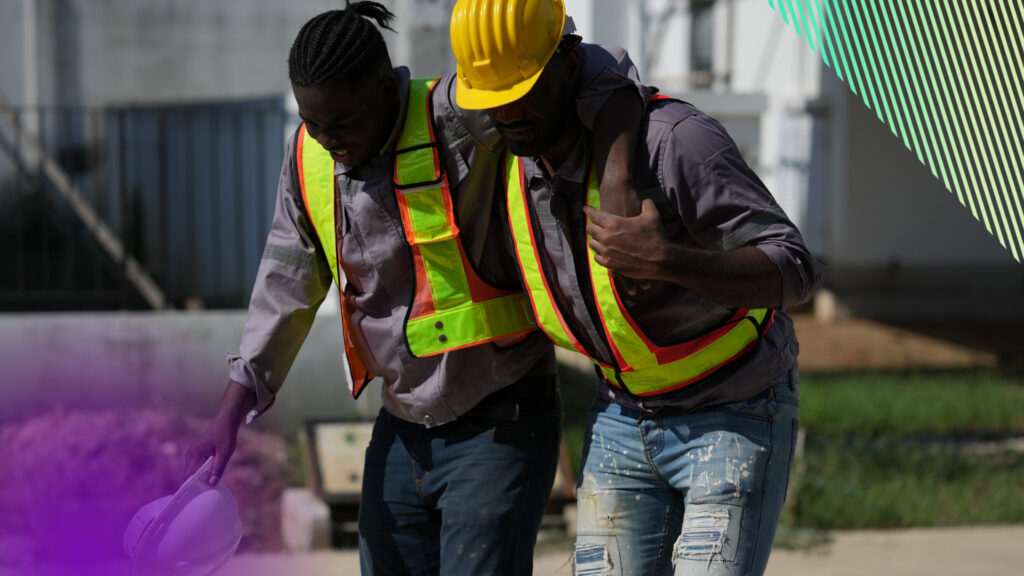
Construction incidents can expose weaknesses not apparent during normal operations. A fall, equipment malfunction, near miss, unsafe excavation, and/or an interaction between contractors could indicate issues with planning, supervision, communication, training, equipment or risk controls. Effective Construction OHS is more than just a record of what has happened. View incidents as learning opportunities to identify weaknesses and prevent similar incidents from happening again. Construction-specific needs emphasise learning from incidents.
The Construction Regulations state that appropriate risk assessments should be reviewed following incidents, ensuring that, where possible, existing controls are reviewed rather than recoupled. The goal of an investigation should go beyond identifying who was there or which rules were violated. Strong Construction OHS will review the reasons for the event, the effectiveness of the existing controls and necessary changes.
Investigate the Causes Instead of Focusing Only on Blame
The goal of an effective incident investigation is to answer who, what, where, when, how, and why. If investigations end after determining that the worker made the final mistake, construction OHS is weaker. Imagine a situation where a worker walks into an area that is not sufficiently covered. One might assume the employee was not following instructions.
A more robust investigation has more questions. Was the hazard well known? Were barriers present? Was training provided for the worker? Was supervision adequate? Have there been any recent site changes? Was there any pressure to cut corners during the production process? Use these to differentiate between the immediate cause and the broader circumstances that enabled the incident to occur.
The General Administrative Regulations of South Africa stipulate that incidents must be recorded and investigated, and a report drawn up. The goal is always to prevent recurrence, so the investigation should lead to measures that make it less likely to happen again. The health and safety committee should review these records and take and monitor appropriate actions. Therefore, evidence should be collected systematically.
This could include photos, witness statements, equipment records, risk assessments, safe working procedures, training records, inspection results, and details of the situation at the time. Investigators should also refrain from judging the cause before gathering enough information. When workers feel investigations are used to blame someone, they may be less likely to report mistakes or near misses honestly. Accountability is not mutually exclusive of learning: It is important when procedures have been knowingly omitted.
Update Risk Assessments and Controls After an Incident
If an investigation’s results are not translated into changes in work practice, they are of little value. Construction OHS should translate incident findings into action to reduce risks in risk assessments, work methods, supervision, equipment, and training. The Construction Regulations require contractors to review relevant risk assessments as part of the incident review process. They must also include risk assessments that identify hazards, assess risks, and outline control measures, safe work procedures, and monitoring and review arrangements.
This means that if something goes wrong, you should ask: did the current risk assessment reflect what could have happened? An assessment may need to be expanded if a hazard was missed. If the hazard was known and an incident did happen, then the controls themselves should be looked at. Incidents relating to falls, for example, might show that a barrier was inappropriate, access routes were poorly laid out, or workers were not aware of the procedure. If an equipment incident occurs, it could show that inspections were insufficient or maintenance periods were too long.
Corrective measures should align with the weakness identified. A different toolbox talk might not be enough to address physical design and equipment issues. The site-specific health and safety plan may also need to be amended as work progresses. The current Construction Regulations require the principal contractor’s health and safety plan to be used throughout the project and reviewed and/or amended as construction progresses.
Learn From Near Misses Before Someone Is Injured
Not all safety warnings lead to injuries. A falling object can miss a worker, equipment can fail without impacting anyone, or an excavation may show instability before it fails. Near misses can be useful sources of Construction OHS information because they indicate hazards, even though they do not result in injury or illness. Near misses do not necessarily fall under the same reporting requirements as reportable injuries, but many construction safety systems track and investigate them internally. In the current operational environment, a contractor is expected to document near misses, as part of site safety management, along with first aid and more serious incidents.
Near-miss reporting helps the organisation learn without waiting for someone to be hurt; workers should also feel confident that if they report a near miss, they will see constructive action taken. When every report is met with assumptions of blame and/or disciplinary measures, employees may stop reporting concerns. Supervisors can strengthen the reporting process by asking workers to explain what occurred, what factors contributed to the event, and what might prevent it from happening again. Patterns are very significant.
The same housekeeping issue reported multiple times from the same access point could indicate a site layout problem. Several small equipment problems might point to inspection or maintenance issues. Incident data, inspection data, non-conformance data and workers’ observations can then be viewed with near-miss data. Use these sources as early-warning indicators in Construction OHS. They provide risk information before injury statistics do.
Track Corrective Actions and Share Lessons Across the Site
An investigation is not complete when the report has been signed. Whether corrective actions are implemented, verified, and communicated to people who might be exposed to the same risks drives construction OHS improvements. Therefore, each important finding needs to be linked to an action, a responsible person, and a deadline for completion. Supervisors/safety personnel should then confirm the change has been made and is working. There are various ways of implementing corrective actions. Some may need changes to the engineering, equipment, barriers, access, work sequencing, procedures, training, or supervision.
The best answer should consider the specific cause found, not just assume additional PPE or retraining. Another important role of health and safety committees is to review incidents. The committee must review records of the relevant incident(s) at the next meeting and take and follow up on reasonably practicable measures to prevent the incident(s) from happening again, as required by the General Administrative Regulations of South Africa.
In addition to sharing with the immediate team, share lessons where appropriate. Other teams carrying out similar lifts, excavations, electrical controls and work-at-height activities may find the information useful if one subcontractor identifies a weakness in any of these activities. Toolbox talks may be beneficial in this context and should describe what has changed and why, rather than offering a typical warning. Construction managers should also look at trends across multiple incidents. If the same activity type keeps causing the problem, it could be a systemic issue.
Conclusion
Safety incidents must never be seen as routine paperwork. Every incident can reveal problems with planning, supervision, communication, equipment, training, or risk control that might not be apparent. The first step to Effective Construction OHS is to investigate incidents thoroughly. The goal must be to learn what went wrong and why. Health and safety committees must review relevant records and ensure preventative measures are implemented. Construction risk assessments should also be reviewed after an incident. This can make an important link between investigation and prevention.
CONTACT ACCELERATE MANAGEMENT SCHOOL TODAY!
Interested in advancing your Construction skills? Enroll in our Construction Occupational Health and Safety Course at Accelerate Management School for essential skills and knowledge in Construction Management.

Frequently Asked Questions
Construction OHS can improve by investigating the incident, identifying root causes, reviewing current controls, reevaluating risk assessments, assigning corrective actions, and ensuring changes prevent recurrence.
Root cause analysis looks at the root causes of an incident, not just one wrong move. This can identify poor supervision, poor planning, poor equipment, procedures or communication.
Near-miss reports can uncover hazards that haven’t caused an injury yet. By examining patterns, the team can identify weaknesses in site conditions, equipment, work methods, or monitoring that require correction.
An incident may reveal an overlooked hazard or inadequate controls. After reviewing the risk assessment, the site team can consider improving procedures, equipment, supervision, or other preventative measures.
Construction OHS can designate a responsible person for each action, set completion criteria, ensure the action is implemented, track its effectiveness, and ensure the changes address the cause identified during the investigation.
Share lessons learned so other teams know about the same hazards and the improvements put in place to prevent recurrence. Communicate relevant changes and preventative actions through toolbox talks, supervisor briefings, and safety meetings.