
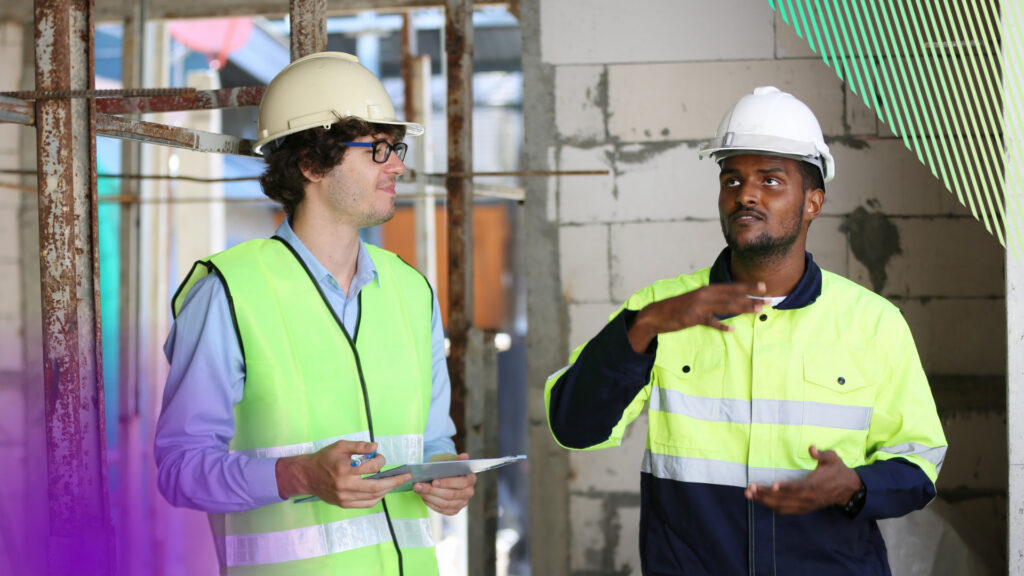
On construction works, workers, subcontractors, supervisors, specialists and temporary workers may come from various linguistic backgrounds. If safety information is not provided in a language some workers fully understand, important information about hazards, procedures, equipment, and emergency actions can be easily misinterpreted. Effective Construction OHS relies on communication that workers can comprehend and use. But giving information doesn’t equal understanding.
A worker may attend an induction, sign a toolbox-talk register, or receive written instructions but still not understand what is expected. International occupational safety advice states that safety information must be easy to understand and, if required, available in workers’ language or in visual formats. The ILO also calls for greater focus on workers who may have communication challenges, since effective supervision relies on people understanding what is happening in the workplace and the protective measures taken to manage it.
Use Multilingual and Visual Safety Communication
A very practical approach to address language barriers in Construction OHS is to provide crucial safety information in non-linguistic formats. If a large percentage of the workforce is more comfortable in another language, someone proficient in the safety topic and the language can translate or explain instructions in that language. This can be the induction material, emergency procedures, toolbox talks, warning notices, and task-specific instructions.
Visual communication can supplement verbal communication. Diagrams, photographs, colour coding, hazard symbols, equipment demonstrations, and step-by-step illustrations can make complex information easier to understand, especially when literacy levels differ. The ILO has created construction safety guidance that is entirely pictorial, to help to communicate common hazards and safe practices across workplaces and language groups.
It includes visual examples for scaffolding, lifting equipment, excavations, electrical work, personal protective equipment, and other typical construction hazards. Visual aids should not substitute for good instruction, especially for high-risk activities. The warning symbol does not necessarily explain how to use the fall-arrest system or what procedure to follow in an emergency. The better way is to mix methods.
Make Toolbox Talks Interactive Instead of One-Way Briefings
Toolbox talks are sometimes used to discuss hazards before work starts, but they may be effective depending on how the conversation is run. For Construction OHS, reading information aloud and getting people’s signatures is not enough to show they understood it. When toolbox talks are specific to the work being done, they can help meet this requirement.
For instance, if a supervisor is talking about excavation work, he or she can highlight the specific exclusion areas, access paths, machine movements and ground conditions on the job site instead of using a generic presentation. Workers should also have opportunities to ask questions in a language they feel comfortable in. A bilingual supervisor, safety representative, or competent interpreter may be available to help communicate the information accurately when needed.
Helpful strategies include having workers repeat the instructions in their own words or showing them how to do the procedure. International safety recommendations also call for verifying that employees have received the information and training, rather than assuming they have absorbed the message. Do this in a spirit of respect, not as a test meant to embarrass someone. Questions like ‘What do you do if this barrier is removed?’ or ‘Show me where you connect the harness before work starts?’ can highlight misunderstandings before work begins. Interactive communication turns toolbox talks into a practical safety control, not an administrative one.
Train Supervisors to Recognise Communication Problems
Supervisors help overcome language barriers because they observe how workers interpret instructions in real work settings. Supervisors must therefore understand the need for effective communication in Strong Construction OHS. If a worker is consistently doing an activity the wrong way, it is not necessarily deliberate disregard for instructions. The supervisor should check whether the procedure was understood, whether the terminology was confusing, or whether training relied only on written material.
The ILO recognises that people who do not speak the main language at work may need extra supervision, and that supervisors should ensure workers know the risks and the controls being implemented. To improve communication, supervisors should become familiar with common safety words used in other languages on site, know who on their team speaks those languages and can reach them, and keep instructions minimal and to the point. Don’t informally delegate translation duties to any staff member who speaks two languages. Hazard terminology and instructions the translator does not understand can change the meaning of technical safety instructions.
Build a Site Culture Where Workers Can Ask for Clarification
Language barriers can be more hazardous if employees are reluctant to say that they don’t understand an instruction. For effective Construction OHS, the workplace culture should not treat questions as a non-value-added task for less competent workers. Construction workers might not want to ask questions for fear of looking stupid, coming across as inexperienced, or slowing production. This can be minimised by encouraging regular questions and making it clear that work should not continue if instructions are unclear. ILO recommends that workers understand the process and who they can raise concerns with, especially migrant and multilingual workers.
It also highlights induction training that is clear, simple, and, if needed, presented in an alternative language or alternative visual format. Safety representatives can also help identify communication issues. Employees may be more inclined to speak up if they trust a person to listen, particularly if they can speak with someone in their native tongue. Site managers should also check incident reports, near misses, and repeated unsafe behaviours for communication failures. If multiple workers interpret the same instruction incorrectly, the issue may be the communication system rather than the individual workers.
Conclusion
No worker should be denied the chance to understand the hazards they face because of language differences. Construction OHS is effective when it communicates safety information in ways workers can understand, remember, and apply in their work. Multilingual explanations can make information more accessible, and visual materials can reinforce key messages without relying only on written language. International guidance specifically recommends clear information design, alternative languages when needed, and visual presentation for those facing communication challenges.
CONTACT ACCELERATE MANAGEMENT SCHOOL TODAY!
Interested in advancing your Construction skills? Enroll in our Construction Occupational Health and Safety Course at Accelerate Management School for essential skills and knowledge in Construction Management.

Frequently Asked Questions
Construction OHS can improve workers’ awareness of hazards, procedures, emergency actions and required controls through multilingual briefings, visual instructions, demonstrations, translated safety material and competent interpreters.
Where workers have different language or literacy levels, visual aids, like diagrams, photographs, hazard symbols, colour coding and demonstrations can reinforce important instructions.
Construction OHS can make a toolbox talk more interactive by discussing real work-site hazards, asking open questions, using practical demonstrations, and having workers describe and/or demonstrate key procedures in their own words.
Just telling them what to do doesn’t mean that they understand. Supervisors should observe how procedures are applied and help ensure workers understand before work proceeds, especially if language barriers may affect safety.
Construction OHS can support multilingual teams by using simple language, appropriate translations, visuals, bilingual support (if applicable), and communication systems that help workers express concerns without embarrassment.
A safe environment for workers to ask questions makes them more likely to catch misunderstandings before they lead to unsafe behaviour. Open communication can enhance hazard reporting, teamwork, and site safety.